Industrial pollution is no longer a peripheral concern—it is a defining challenge for economies, societies, and ecosystems worldwide. Its impacts are evident in deteriorating air quality, contaminated water systems, and rising health risks, all of which undermine industrial competitiveness and long term resilience. For a country pursuing ambitious growth alongside net zero commitments, this issue sits at the very nexus of economic progress and environmental responsibility. This challenge, however, is also an opportunity. By embedding sustainability into industrial processes, we can transform pollution control from a reactive obligation into a proactive driver of innovation and competitiveness. The path ahead demands a mindset of responsibility and accountability—where industry leaders, policymakers, innovators and academia recognize their role in safeguarding communities and ecosystems. Compliance alone is no longer sufficient; the future demands that we exceed regulatory standards and set new benchmarks in environmental stewardship.
Operationally, this requires industries to move beyond incremental improvements and embrace systemic transformation. This means enhancing energy efficiency, investing in cleaner technologies, adopting circular economy models, and minimizing waste generation. Technological advancements hold immense potential to accelerate this transformation. Breakthroughs in waste recycling, clean energy, pollution control systems, and sustainable materials provide industries with powerful tools to reduce their environmental footprint. Collaboration between industry and innovators is critical to harness these solutions and scale them effectively.

Equally important is the policy ecosystem. Regulations must evolve to be forward looking, incentivizing sustainable practices and encouraging industries to embed environmental management into their core strategies. Policy frameworks should drive behavioral change, ensuring that sustainability is not treated as a peripheral concern but as the foundation of industrial progress. Aligning policy, practice and innovation will enable industries to move beyond mitigation toward creating positive environmental impacts.
The Industrial Pollution Control Congress 2026 embodies this vision. It seeks to catalyze a cultural and behavioral shift, placing sustainability at the heart of pollution control strategies. This congress is not just about addressing challenges—it is about shaping a future where industry, government, and academia unite to deliver solutions that are bold, collaborative, and transformative. Together, we can redefine industrial growth to be both economically robust and environmentally responsible. The journey demands commitment, innovation, and leadership, and as pioneers in your fields, you hold the power to lead this change.
Thank you,
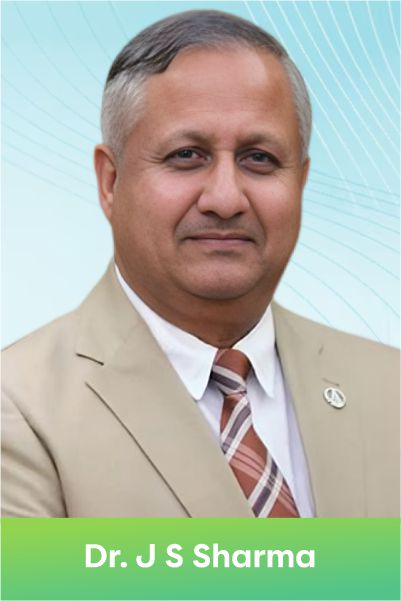
Dr. J S SharmaPresident, Initiatives for Energy and Sustainability Crossroads Council (IESCC);
Member, CAQM for TPPs and DG Sets;
Member, Domain Expert Group on Ecology, Environment and Sustainability, CSIR-HQ, MoST, Govt. of India &
Former GGM & Environment Head (ONGC)

